Procedures
Approach procedures
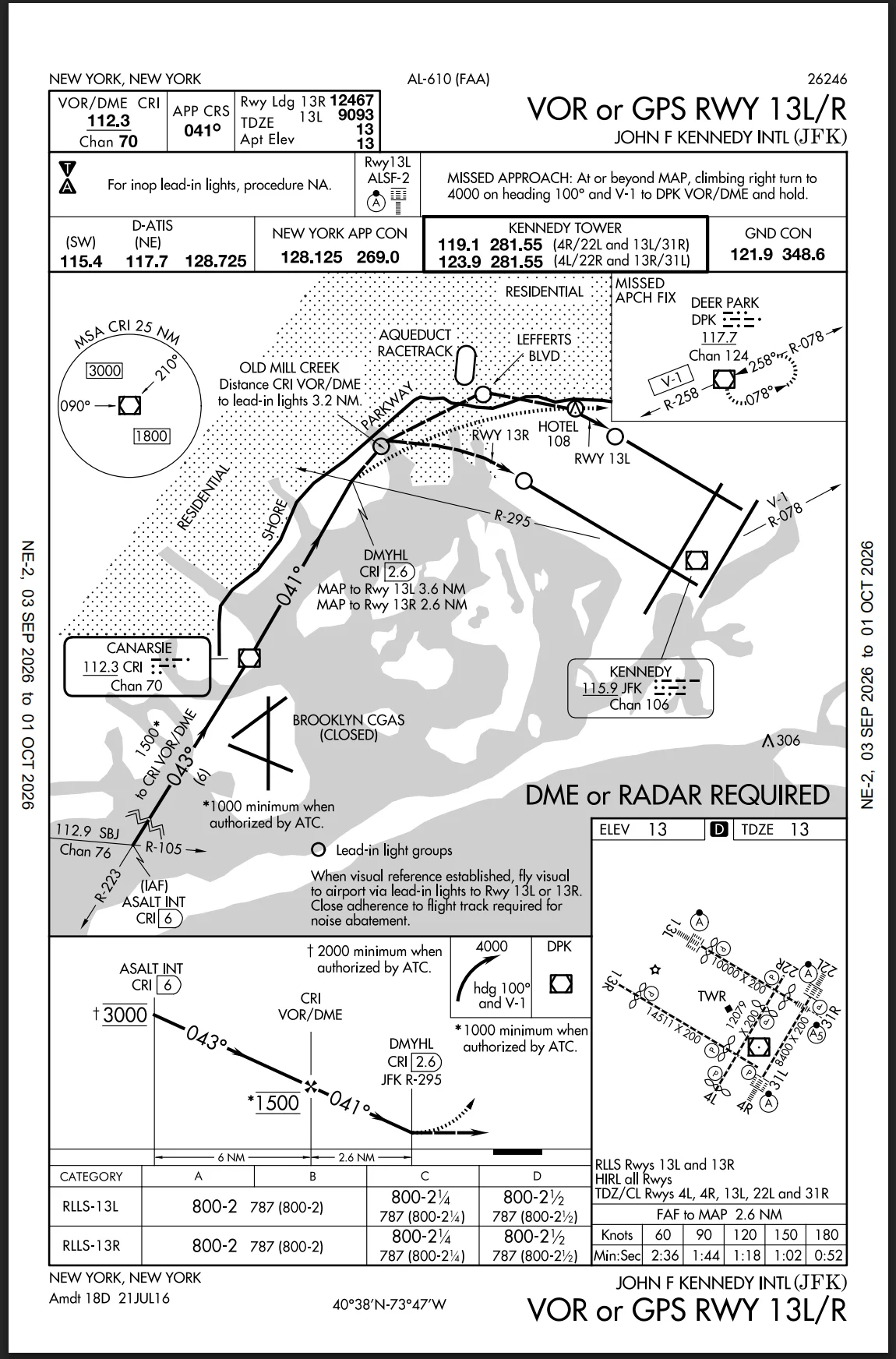
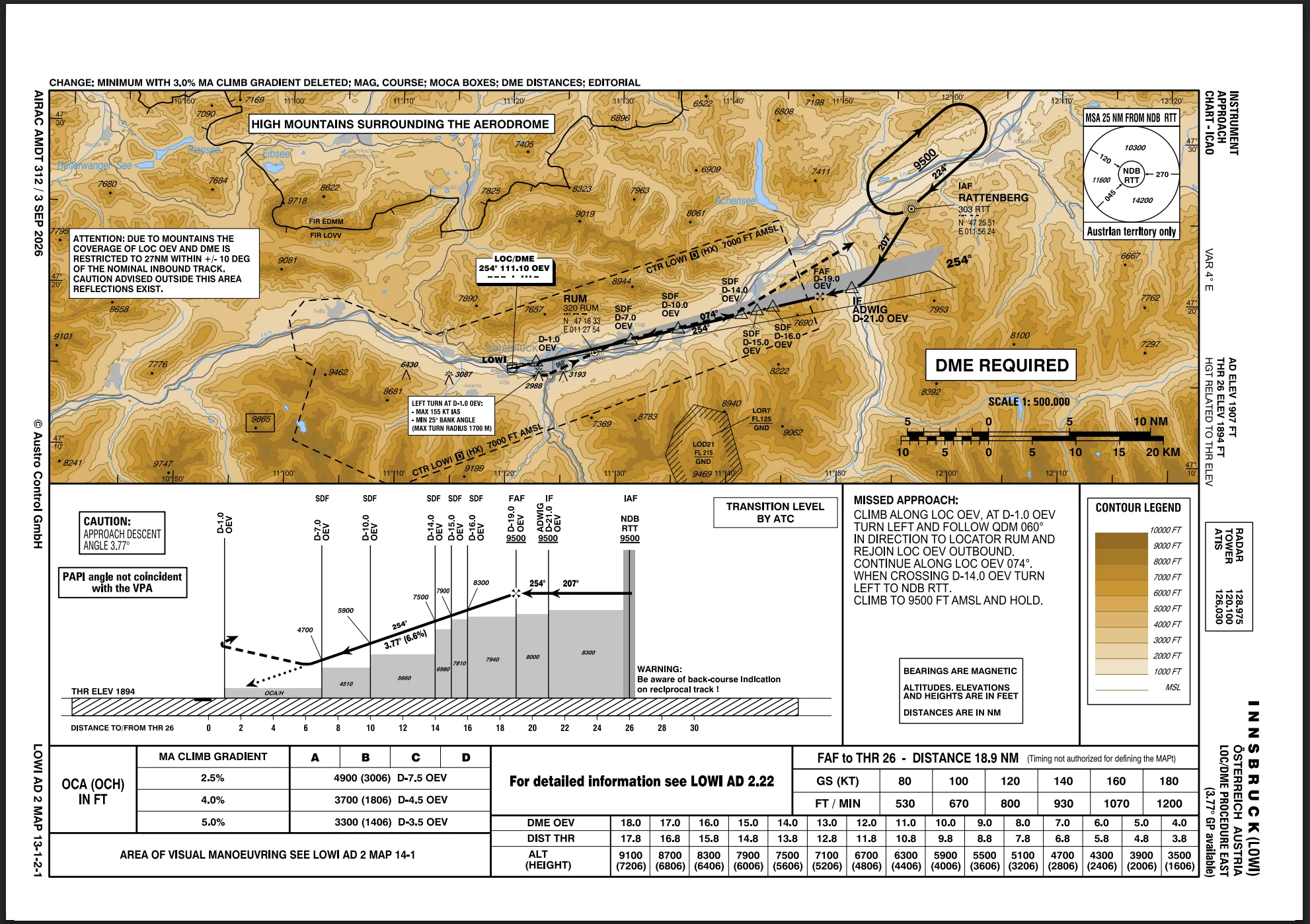
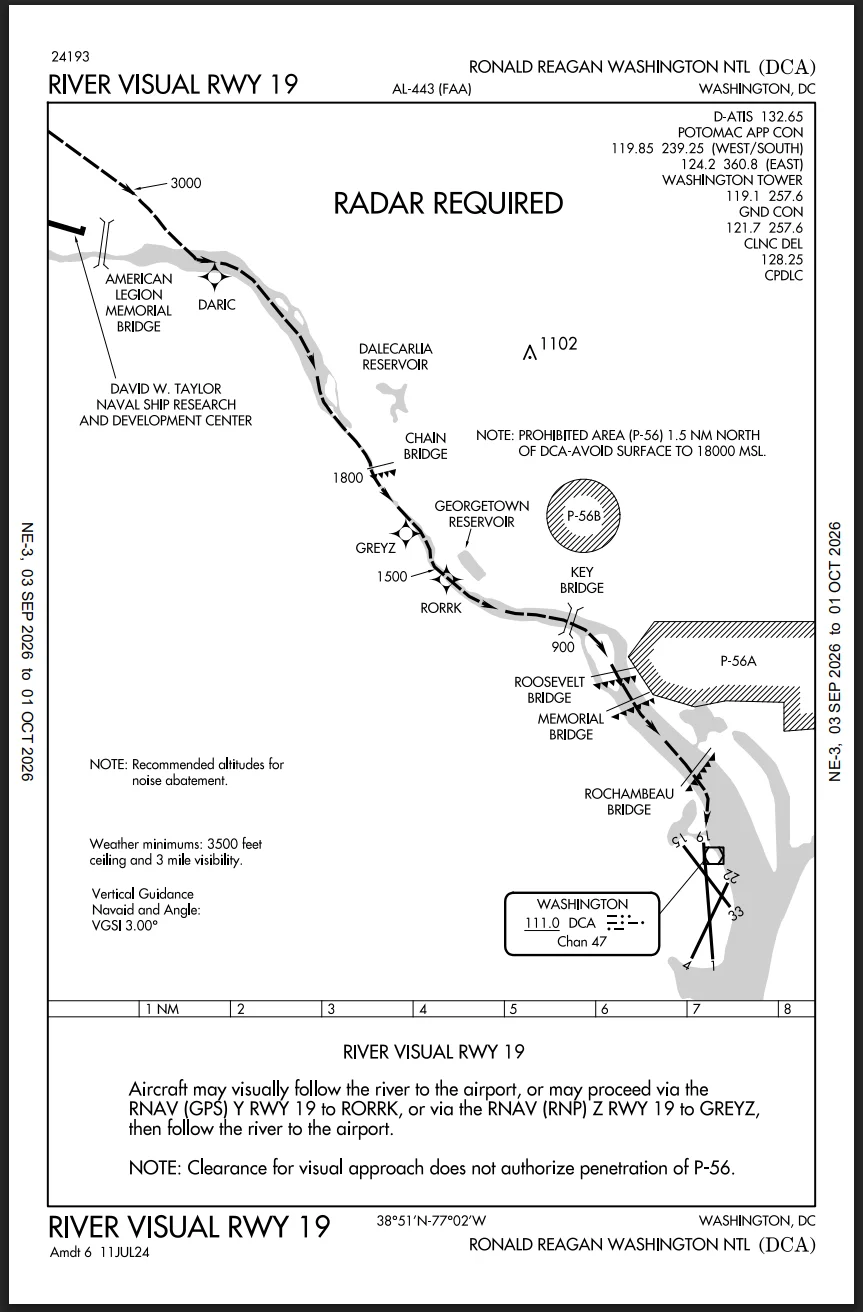
Every instrument approach follows the same skeleton — what differs is how you are guided. Expand a procedure to see how it works, what is special on the chart, and how to fly it in MSFS.
How it works
- 1
A localizer (LOC) antenna at the far end of the runway transmits a lateral beam along the extended centerline — your needle centers when you are on it. - 2
A glideslope (GS) antenna beside the runway provides a vertical beam, typically a 3° descent path to the touchdown zone - 3
You intercept the localizer first, then the glideslope from below, and follow both needles (or the autopilot) down. - 4
At the Decision Altitude you decide: runway in sight → land; not → go around.
On the chart
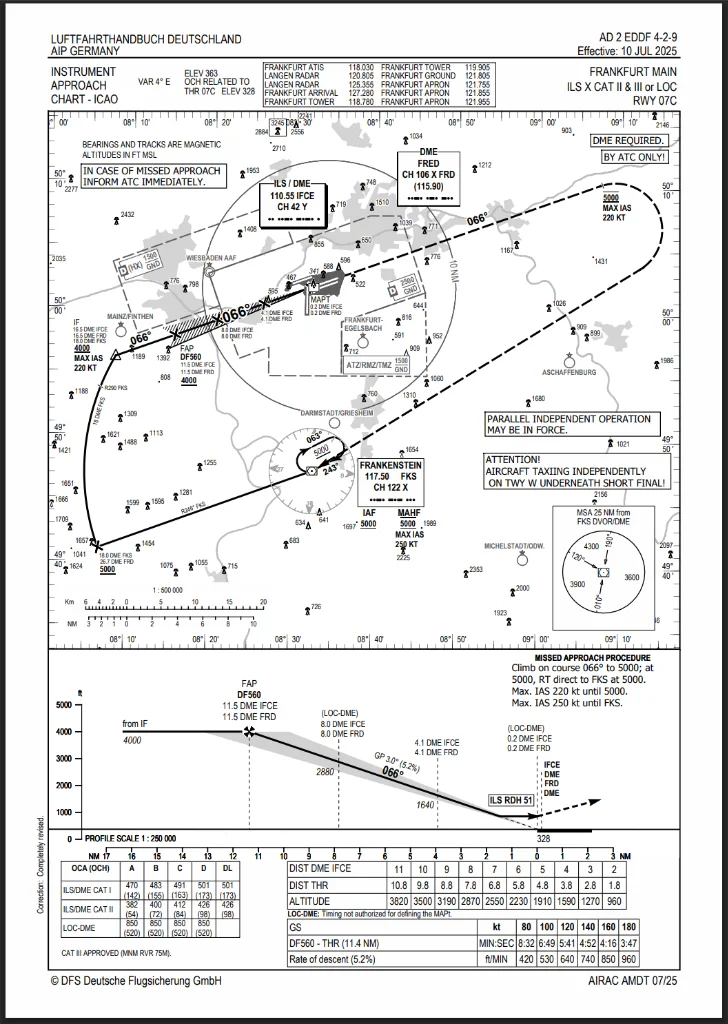
In MSFS
Load the approach in the FMC Arm APPR mode only once established on the localizer, approaching the glideslope from below. Check the published course against your course selector — some sceneries differ by a degree or two.