Chart Types 6 min read

Chart types at a glance

Airport diagram, SID, STAR, approach plate, enroute — which chart answers which question.

Not every chart does the same job. A flight splits neatly into phases, and there is a chart type for each of them. If you know which chart answers which question, half the battle is won.

Airport diagram

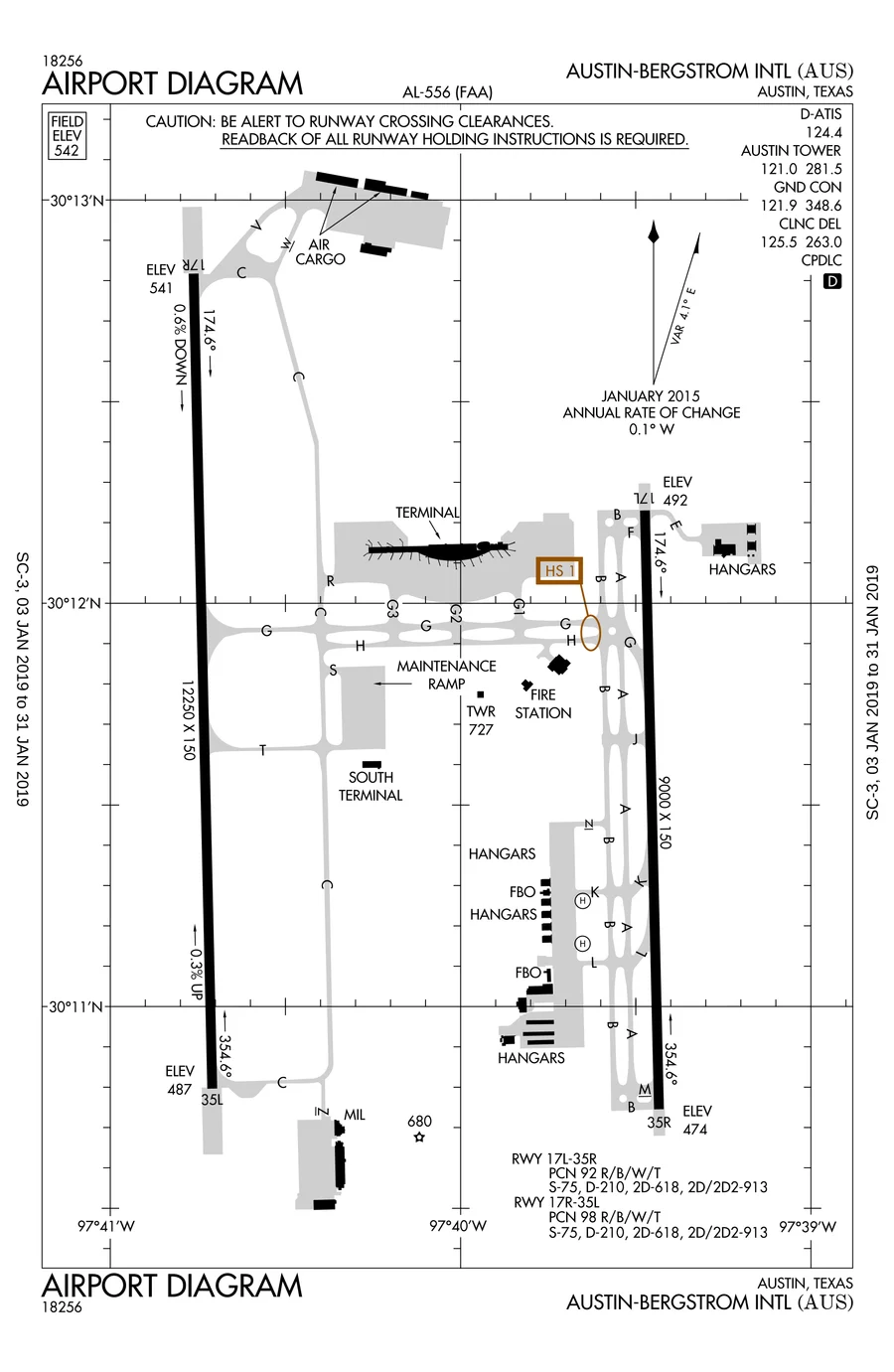
The airport seen from above: runways, taxiways, aprons, hot spots. You need it on the ground — taxi instructions only make sense with this chart in front of you.

FAA airport diagram of Austin
A real FAA airport diagram — Austin-Bergstrom (KAUS): runway layout, taxiway letters, terminals, and the ATIS/tower/ground frequencies in the header.

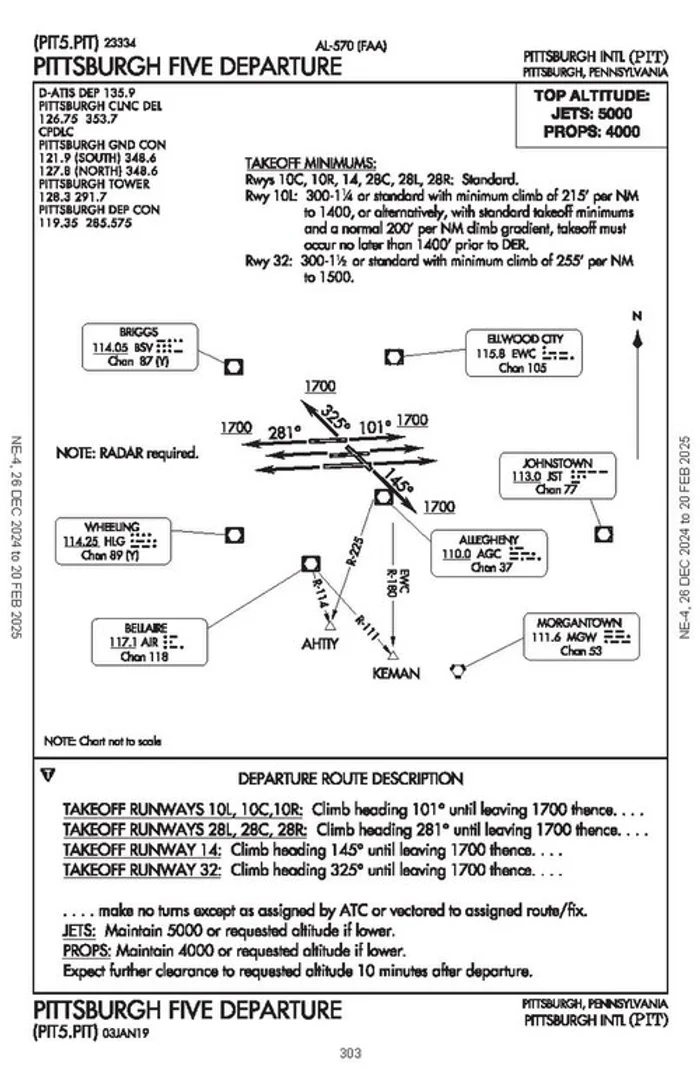
SID — Standard Instrument Departure

A pre-cleared route that takes you from the runway to the enroute structure, e.g. "SULUS 5S". Some are flown on headings and vectors, others are fully navigable paths — the chart tells you which, plus the takeoff minimums per runway.

Pittsburgh Five Departure
A real FAA SID — the Pittsburgh Five Departure: takeoff minimums and frequencies up top, the departure route description at the bottom, radar vectors to the surrounding VORs in between.

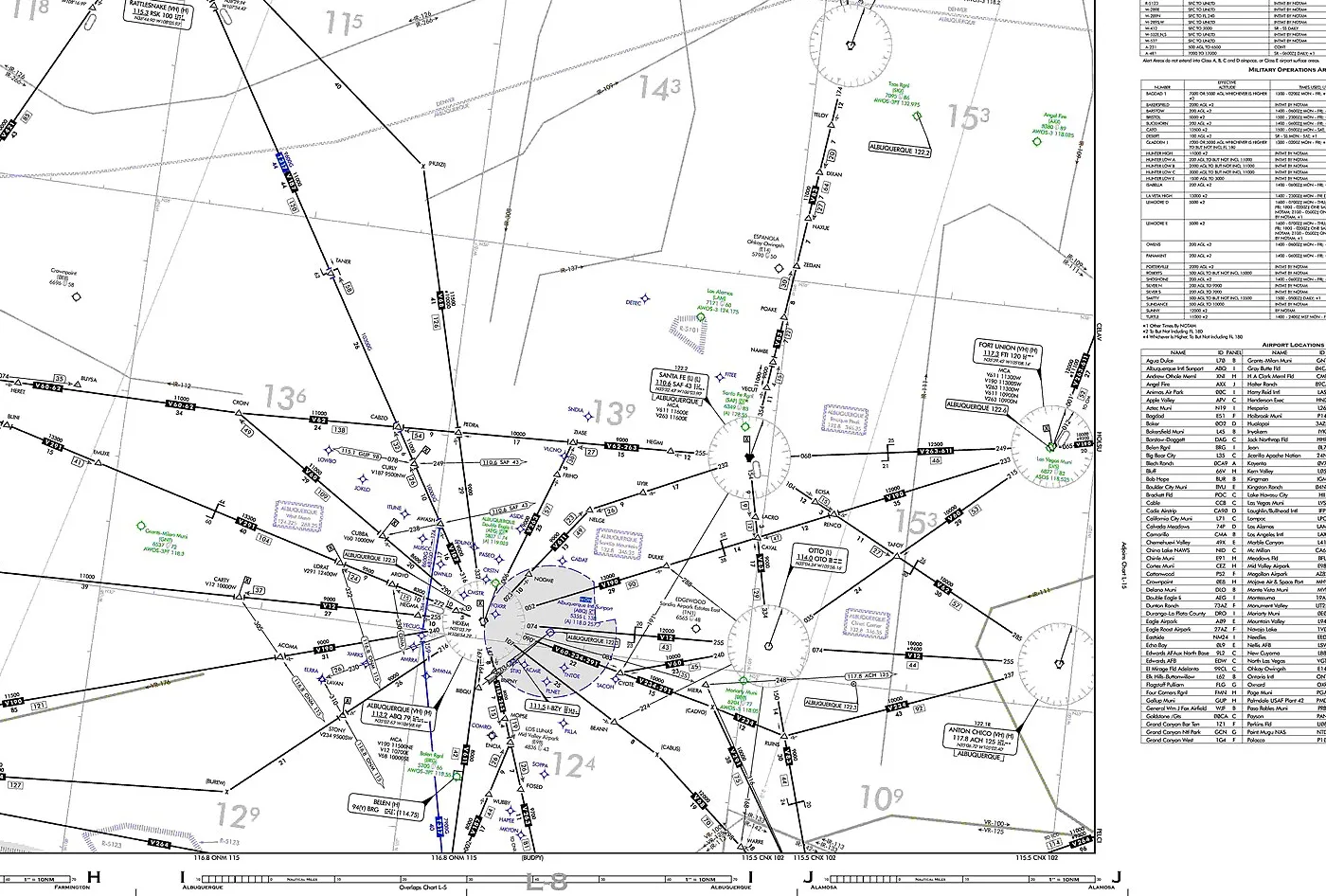
Enroute chart

The "motorway map" of the sky: , waypoints, navaids and minimum enroute altitudes — the chart that keeps you clear of terrain and restricted airspace between airports.

IFR low-altitude enroute chart
A real FAA IFR low-altitude enroute chart (L-08): airways radiating from VORs like Albuquerque ABQ, with fixes, minimum enroute altitudes and restricted airspace in between.

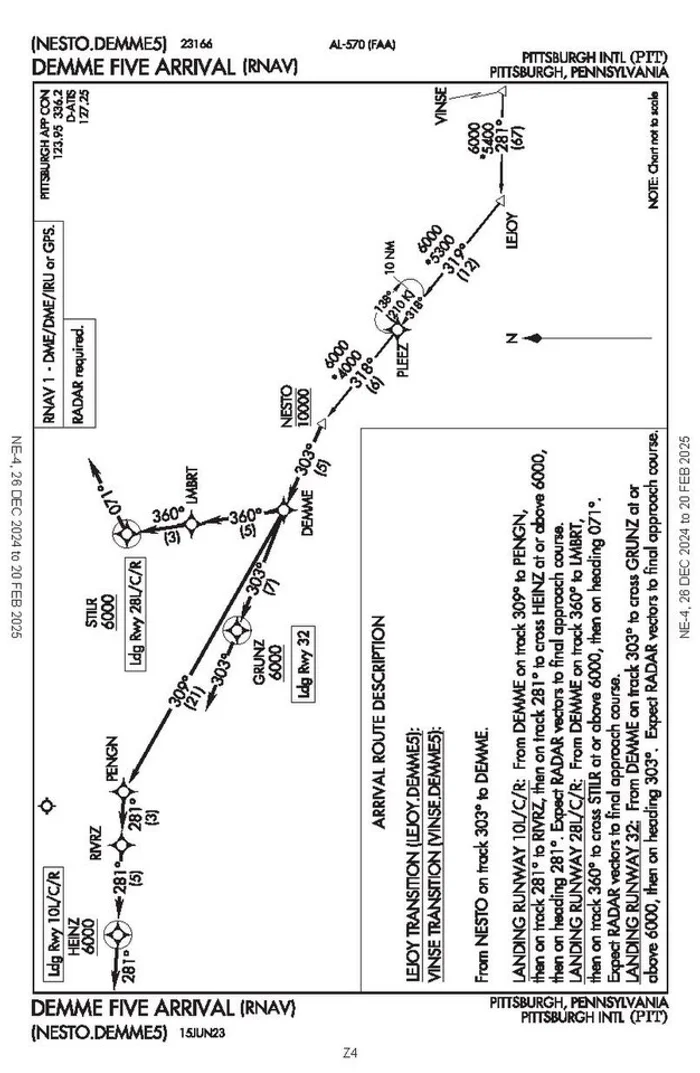
STAR — Standard Arrival

The mirror image of a SID: it brings you from the enroute structure down to the vicinity of the airport. Named transitions feed one common route that ends at a feeding the approach — or where radar vectors take over.

DEMME Five Arrival
A real FAA STAR — the DEMME FIVE ARRIVAL (RNAV) into Pittsburgh: the LEJOY and VINSE transitions merge into one route, with crossing altitudes and speeds printed at the fixes.

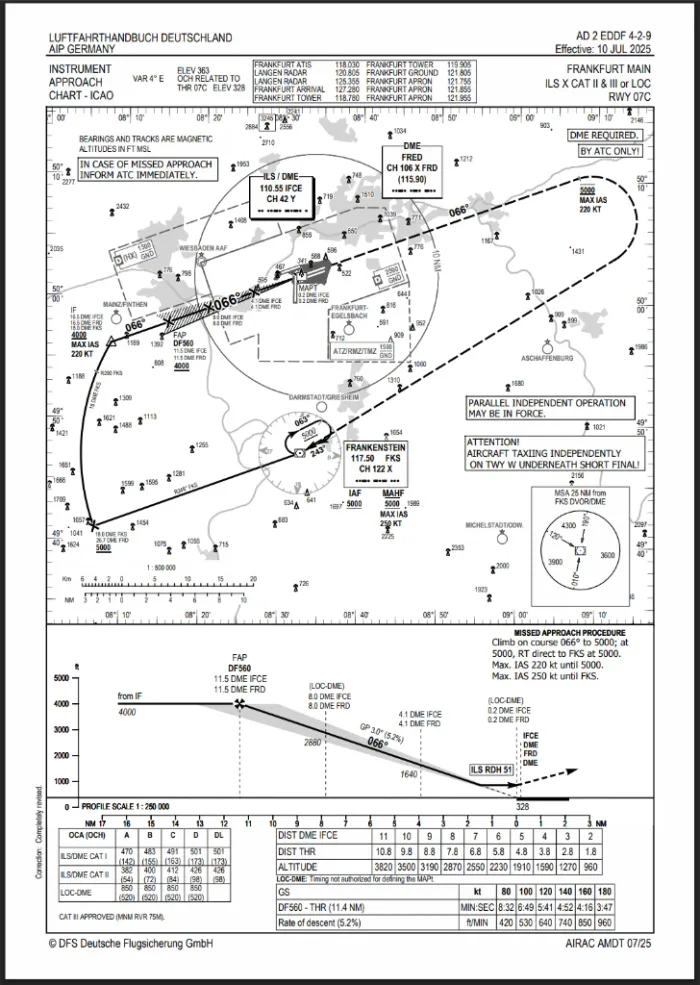
Approach plate (IAP)

The most detailed chart of the five: the final few miles down to the runway, with minima per . This is the chart this site focuses on — Anatomy of an approach plate takes one apart section by section.

A real approach plate
The real Frankfurt ILS 07C approach plate: briefing strip, plan view, profile and minima table on a single page.

How they connect

A typical flight reads like a sentence: runway → SID → enroute → → approach → runway. Each procedure "hands you over" to the next — a SID ends where the airway begins, a STAR ends at a fix feeding the approach or where radar vectors take over. The dispatch paperwork that holds this route is decoded in Reading an OFP .