Technique 7 min read

From STAR to touchdown

How STAR, approach and missed approach connect — and how to brief and fly the whole chain in the sim.

An approach does not start at the runway — it starts where the ends. Understanding the hand-offs between procedures turns a confusing chart stack into a single continuous path.

The chain, step by step

  • STAR ends at an Initial Approach ( ) or at a point where vectors you.
  • Transition/initial segment — from the IAF towards the intermediate fix, often via a published arc or holding pattern.
  • Intermediate segment — you are aligned with the final course and configuring.
  • Final segment — from / intercept down to / .
  • — a fully published procedure; you are never "just climbing away".
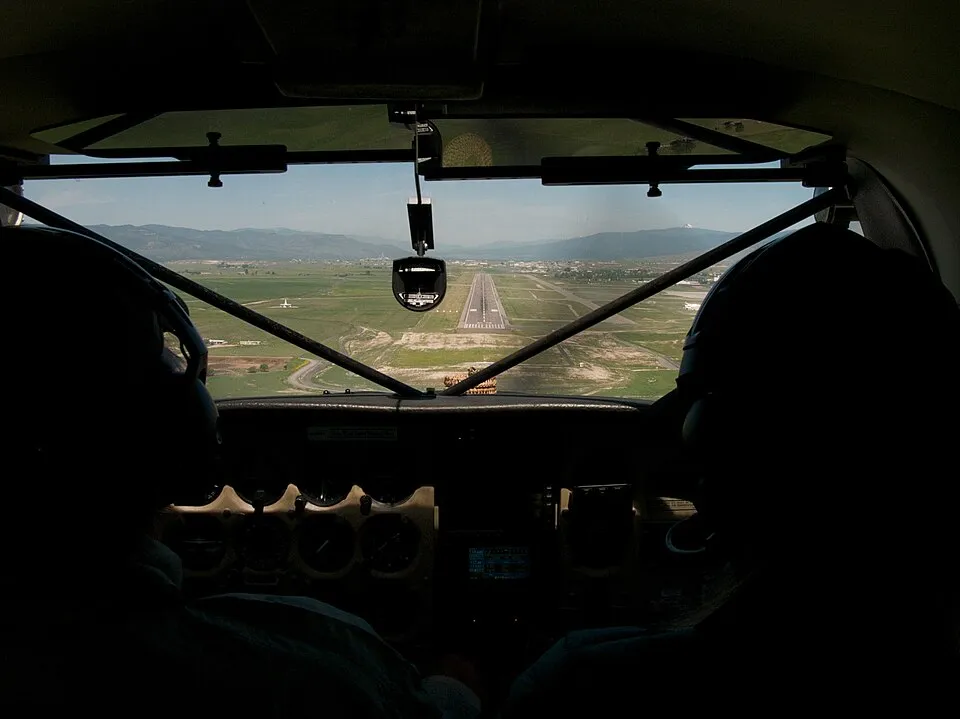
Cockpit view on approach
The goal: the runway environment in the windshield at decision altitude. Photo: Sam Beebe, CC BY 2.0, via Wikimedia Commons

Vectors vs. own navigation

Charts show the full procedure, but ATC often shortcuts it: "vectors to final" means you will be guided onto the final course by headings. In MSFS the built-in ATC can vector you, but with AI traffic and online networks ( ) you need to be able to fly both — the published procedure AND vectors. The Phraseology page covers the radio side, and the Procedures page breaks down the different approach types.

Briefing like a pilot

Before , brief out loud: navaid frequency and course, the altitude at the FAF, your DA/MDA, the missed approach procedure and the expected taxi route. The Chart Explorer tour mirrors this exact flow — Altitudes and minima explains the numbers you brief.

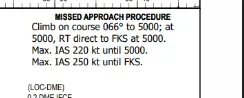
Missed approach block on a real plate
The missed-approach text block on the Frankfurt ILS 07C plate — a fully published procedure with headings, altitudes and speed limits, not an improvisation.

While you brief, check the minima table for a climb-gradient condition: on some plates the published minima are only valid if you can outclimb the standard 2.5% missed-approach gradient — Altitudes and minima shows what that looks like.